When to Use Vitamin C Serum: Day or Night?

Morning is the ideal time to use a Vitamin C serum. Vitamin C is an antioxidant, so it works best as a daytime shield against UV rays and pollution. In Pakistan, where the UV Index sits at 8-11 for most of the year, this daytime protection matters every single day. Night use is acceptable and still helps, but you lose the antioxidant benefit when there is no sun or pollution to defend against. For most people, the simplest answer is: apply Vitamin C every morning under SPF 50.
Table of Contents
Day or Night - The Short Answer
Use Vitamin C in the morning if you want one clear answer. It is an antioxidant, which means it neutralizes free radicals from UV light and pollution before they can damage your skin. These threats are highest during the day, so morning use gives you the most value. Pairing it with SPF 50 makes both products work harder than either one alone.
Night use is not wrong, and some people prefer it. If you apply retinol or strong acids in the morning, or if Vitamin C stings your skin during the day, shifting it to night is a fine choice. You still get the brightening and collagen benefits at night. You simply miss the extra antioxidant defense that daytime use provides. The best time is the one you will actually stick to every day.
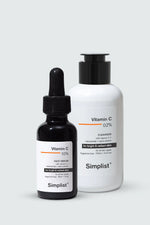
You can also use it twice a day once your skin is used to it. This is not necessary for most people and can irritate sensitive skin. A single daily application, used consistently, gives excellent results. Consistency matters far more than the exact time of day. The Simplist Vitamin C 10% Face Serum is gentle enough for daily use at a beginner-friendly strength.
Why Morning Is Ideal for Vitamin C
Vitamin C (L-ascorbic acid) is a powerful antioxidant. Its main daytime job is to mop up free radicals created by sunlight, car fumes, and city pollution. Left alone, these free radicals damage skin cells and speed up dark spots and fine lines. Applying Vitamin C in the morning puts this shield in place exactly when you need it most.
Morning use also teams up perfectly with sunscreen. Vitamin C is not a sunscreen and does not block UV on its own. What it does is boost the protection your SPF gives you, catching the free radical damage that slips past sunscreen. Together they reduce pigmentation, dark spots, and premature aging far better than either alone. This is why so many dermatologists recommend Vitamin C as a morning step.
The order is simple: cleanse, apply Vitamin C serum, then moisturizer, then SPF 50 on top. Use 2-3 drops and press it gently into clean, dry skin. Wait about 60 seconds for it to absorb before your next step. Browse the full Vitamin C collection to find the right format for your routine. For a step-by-step walkthrough, read our guide on how to apply Vitamin C serum on your face.
Can You Use Vitamin C at Night?
Yes, you can use Vitamin C at night, and it still works. While you sleep, your skin shifts into repair mode and renews itself. Vitamin C supports this by helping build collagen and fade existing pigment. So night use still delivers brighter, firmer, more even skin over time.
The trade-off is that you lose the antioxidant shield benefit. At night there is no UV or daytime pollution to defend against, so that protective role goes unused. You still get brightening and collagen support, just not the daytime defense. For this reason, night use is a solid plan B rather than the first choice for most people.
Night use makes good sense in a few cases. Choose it if Vitamin C makes your skin sting under daytime sun, or if your mornings are already packed with other steps. It is also useful if you use a strong morning routine and want to spread your actives across the day. Just remember to follow it with a moisturizer to lock in hydration and reduce any irritation. To compare both approaches in detail, see our broader guide on how to use Vitamin C serum.
Morning vs Night - Side by Side
Both timings give you the brightening and collagen benefits of Vitamin C. The real difference is the antioxidant shield, which only counts during the day. Here is a quick side-by-side view to help you decide which fits your routine.
| Factor | Morning | Night |
|---|---|---|
| Antioxidant shield | Full benefit - fights UV and pollution all day | Wasted - no daytime threats to defend against |
| Brightening and pigment fade | Yes | Yes |
| Collagen support | Yes | Yes |
| Works with SPF 50 | Yes - the ideal pairing | Not relevant at night |
| Best for | Most people, high-sun climates like Pakistan | Sensitive skin, busy mornings, retinol-free nights |
For most readers in Pakistan, morning wins because of the strong year-round sun. If you can only fit it in at night, that is still worth doing. The serum that gets used daily beats the perfect routine you skip.
How to Fit Vitamin C Into Your AM and PM Routine
Your morning routine should follow a thin-to-thick order. Start with a gentle cleanser, then apply Vitamin C serum on clean, dry skin. Follow with moisturizer, and finish with SPF 50 as your last step. This order lets the serum absorb properly and sit under full sun protection.
If you choose to use Vitamin C at night instead, the steps are similar minus the sunscreen. Cleanse, apply Vitamin C serum, then seal it with a moisturizer. The moisturizer locks in hydration and softens any tingling. Give the serum a minute to absorb before layering the cream on top.
Whichever time you pick, a few habits boost your results. Use 2-3 drops and press, do not rub, to protect the skin barrier. Apply it consistently every day rather than now and then. Keep the bottle next to your cleanser so you never forget the step. Small, steady habits are what turn a good serum into real, visible change.
Using Vitamin C With Other Actives
The golden rule is to keep Vitamin C and retinol in separate routines. Both are active and using them together can leave skin red, dry, and irritated. The cleanest split is Vitamin C in the morning and retinol serum at night. This way each active does its job without clashing with the other.
Niacinamide, on the other hand, pairs well with Vitamin C. An old myth said the two cancel each other out, but this has been tested and disproven. You can layer them in the same routine with no problem. Niacinamide also helps calm any sensitivity, which makes it a friendly partner for Vitamin C.
Hyaluronic acid is another easy match. Apply it on damp skin first, then layer Vitamin C on top. The hydration gives Vitamin C a smooth base to work from and softens any sting. For pigmentation, many people use Vitamin C in the morning and a different brightener like kojic acid at night. This covers more than one pigment pathway without overloading your skin at once.
Vitamin C and Pakistan's High-Sun Climate
Pakistan's climate makes a strong case for morning Vitamin C. Cities like Karachi, Lahore, and Islamabad sit at a UV Index of 8-11 for most of the year. That level of sun drives free radical damage, dark spots, and premature aging. A morning antioxidant step gives your skin real backup against this daily load.
Heat, humidity, and pollution add to the pressure on your skin. Sweat and traffic fumes raise the level of free radicals your skin faces by midday. Vitamin C helps neutralize these before they cause lasting harm. This is exactly why the morning slot is so valuable in our climate, not just a nice-to-have.
None of this replaces sunscreen, which stays non-negotiable here. Use SPF 50 sunscreen every morning on top of your Vitamin C, and reapply through the day when you are outdoors. Skin tones common in Pakistan are more prone to post-inflammatory pigmentation, so sun protection is the single biggest factor in fading dark marks. Vitamin C and SPF together are a far stronger defense than either one alone.
Frequently Asked Questions
Should I use Vitamin C serum in the morning or at night?
Morning is ideal for most people. Vitamin C is an antioxidant, so it works best as a daytime shield against UV and pollution. Night use still brightens and supports collagen, but you lose the antioxidant benefit. Pick the time you can keep up every day.
Can I use Vitamin C serum twice a day?
Yes, once your skin is used to it. Apply it in both your morning and evening routines if your skin tolerates it well. This is not needed for good results, and it can irritate sensitive skin. One consistent daily application is enough for most people.
Do I still need sunscreen if I use Vitamin C in the morning?
Yes, always. Vitamin C is not a sunscreen and does not block UV rays on its own. It boosts the protection your SPF gives but cannot replace it. Apply SPF 50 every morning as the last step over your Vitamin C.
Can I use Vitamin C and retinol together?
Keep them in separate routines. Using both at once can leave skin red, dry, and irritated. The simplest split is Vitamin C in the morning and retinol at night. This lets each active work without clashing with the other.
How long does Vitamin C take to show results?
Glow and brightness often appear within 2-3 weeks. More even tone shows around 6-8 weeks, and stubborn dark spots take 8-12 weeks. Daily use and SPF 50 every morning are the two biggest factors in speed. Consistency beats any single perfect application.
Is it bad to use Vitamin C at night?
No, it is not bad, just less than ideal. Night use still gives brightening and collagen support while you sleep. You only miss the daytime antioxidant shield. It is a good option for sensitive skin or very busy mornings.
Written by the Simplist Skincare Team - reviewed for accuracy against dermatological best practice. Educational content only. Not a substitute for personal medical advice.